I remember helping a new creator who had made a beautiful download, posted it once, and felt discouraged when no one bought it that week. Her product was not the problem. She had simply skipped a few small steps that make it easier for the right customer to understand and trust an offer. Learning about digital product selling mistakes beginners make can save you time, energy, and a lot of second-guessing.
You do not need to be perfect to sell a helpful digital product. You do need a clear buyer, a clear benefit, and a simple way to improve after you listen. Let’s walk through the mistakes that show up most often and the practical adjustment that helps.
Digital Product Selling Mistakes Beginners Can Avoid
Most early mistakes are not dramatic. They are quiet gaps: a vague title, an unclear product image, a product made for everyone, or a launch that ends after one post. When you see the pattern, you can make a better decision before it becomes a discouraging habit.
Use this quick self-check before you launch
Take a look at the offer as if you have never seen it before. Can a buyer understand the problem, the outcome, and the next step in a few seconds?
- Name the specific person the product helps.
- State one practical result the buyer can expect from using it.
- Show what is included instead of making the buyer guess.
- Check that the download, instructions, and links work.
- Invite feedback instead of assuming silence means the product has no value.
OTHER RELEVANT BLOG POST TO CHECK OUT

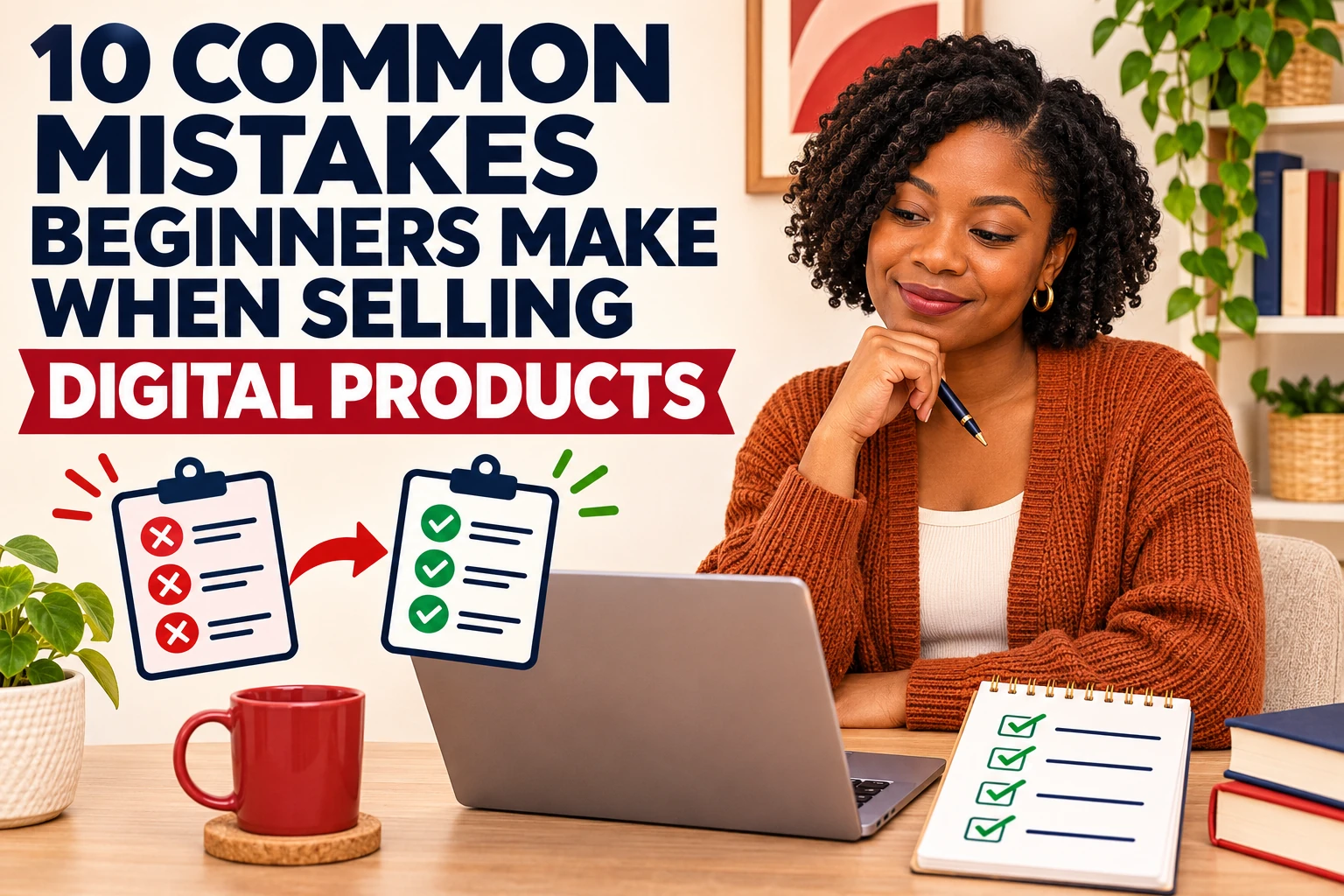
10 common mistakes—and the better move
1. Trying to sell to everyone
A product becomes easier to buy when a person recognizes themselves in it. Replace a broad phrase such as “for busy people” with a clearer audience and situation, such as a weekly planning tool for new freelancers.
2. Creating before listening
You do not need a giant survey, but you should listen to real questions. Read comments, talk to people you hope to help, and notice the words they use when they describe the problem.
3. Making the product harder than it needs to be
A first product can be a focused checklist, template, or short guide. More pages do not automatically create more value. Clear guidance often wins.
4. Using unclear product images or descriptions
Your buyer should see what the resource is and why it is useful. Show a preview, explain the format, and write in plain language.
5. Pricing without explaining value
Price is only one part of the decision. Help people see the time, confusion, or repeated work the resource can reduce. Keep every marketing claim truthful and specific.
6. Posting once and disappearing
A helpful product may need more than one introduction. Share a tip from it, show an example, answer a common question, and remind your audience where to find it.
7. Skipping the customer experience
Test the file and every link on both a phone and a computer. Add simple instructions so the buyer knows what happens after purchase.
8. Copying instead of learning
Inspiration is useful, but copying someone else’s offer or wording does not build trust. Use your own examples, your own organization, and your own voice.
9. Ignoring feedback
A question from a buyer can reveal the next improvement. Keep a short note of what people ask so you can refine the current product or plan a related one.
10. Quitting before you have enough information
One quiet launch is information, not a final verdict. Improve the message, reach another group of people, and keep learning before you decide the idea cannot work.
A simple example
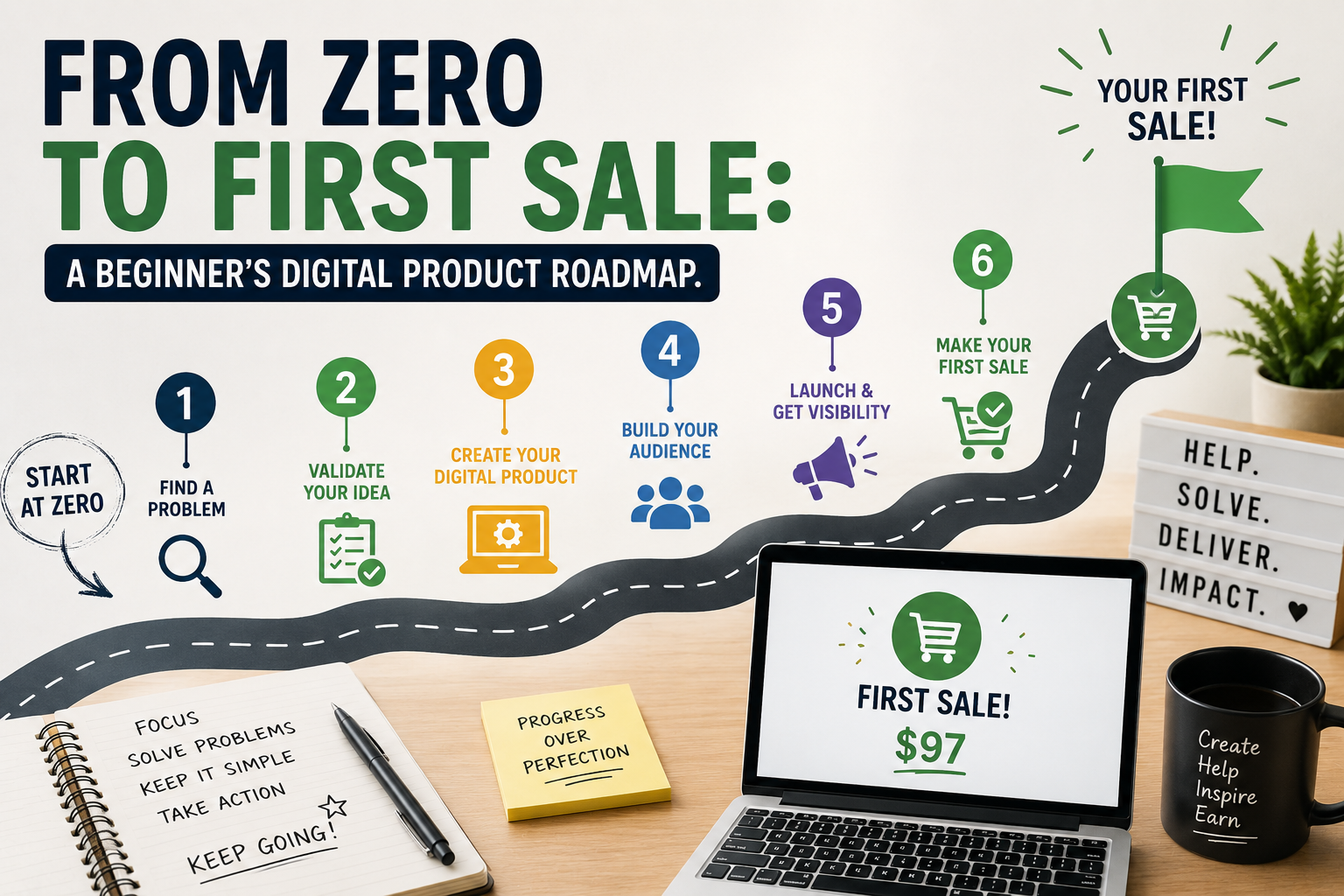
Imagine a meal-planning printable with a pretty cover but no instructions. A buyer may like the look yet leave without understanding how it helps. Add a preview page, a short explanation, and a note about the weekly decision it makes easier. That small change turns design into usefulness. For another beginner perspective, read From Zero to First Sale.
Keep your marketing honest
Avoid promises that sound bigger than the product can support. A useful template can save time or give structure; it cannot honestly guarantee a sale, a job, or a specific income result. The FTC’s small-business advertising guidance is a helpful reference when you write promotional copy.
A practical digital product selling mistakes beginners checklist
When you are working on digital product selling mistakes beginners, do not try to fix every part of your business at once. Choose one small action that improves the customer’s experience today. That might be clarifying a title, asking a better question, simplifying a page, or testing a file. Small changes are easier to complete, and they give you clearer information about what to do next.
For example, if people visit a product page but do not understand what they receive, do not immediately assume the price is wrong. Try improving the preview image, the first sentence, and the list of what is included. If people understand the offer but have a different concern, write that question down and address it honestly. This is how you replace assumptions with useful improvements.
- Can a new visitor identify the customer and problem quickly?
- Does the product title explain the outcome in plain language?
- Have you tested the file, checkout, and instructions yourself?
- Are your marketing claims specific, honest, and supportable?
- Have you chosen one way to invite customer feedback?
Use a short review session
Set aside twenty quiet minutes this week to review your work without judgment. Read the product description, open the sample, and imagine the moment a first-time customer sees it. Write down one thing that feels clear, one thing that could confuse someone, and one next action. This kind of review makes digital product selling mistakes beginners feel like a repeatable skill instead of a stressful guessing game.
Let real feedback guide the next version
You do not need to accept every suggestion, but you should notice patterns. If several people ask the same question, that is a sign to improve an instruction, add an example, or change the way you introduce the product. Keep a simple note of questions and ideas. Over time, those notes can guide product updates, new blog posts, and related resources that make your offer more useful.
Turn one mistake into a better customer experience
Picture a new seller who has a helpful budgeting spreadsheet but calls it “My Money File.” The title does not tell a buyer who it helps or why it is useful. A stronger version might say, “Weekly Budget Tracker for Beginners Who Want to See Where Their Money Goes.” The file is still the same, but the customer can now understand the purpose before they open it. This is why clarity is often a better first improvement than adding more pages.
Now imagine that the seller adds a one-page start-here note, checks the download, and shares one short tip about weekly budgeting. Those are small steps, but together they remove uncertainty for the buyer. When you find a digital product selling mistake, correct the part of the experience that is actually unclear instead of rebuilding the whole product.
- Choose one product or idea to review.
- Write its customer and outcome in one plain sentence.
- Ask whether the title explains that outcome.
- Test one link, file, or instruction as a buyer would.
- Make one improvement before adding a new feature.
- Keep the questions you receive in a simple note.
What to notice as you move forward
Notice which changes make the offer easier to understand. That is more valuable than trying to make every part of your business look polished overnight. Consistent, customer-centered improvements help you build trust one useful step at a time.
Frequently asked questions
What is the biggest mistake beginners make when selling digital products?
Often it is trying to help everyone at once. A clearer audience and a smaller useful outcome make the offer easier to explain and improve.
Should I lower my price if my product is not selling?
Not automatically. First review the title, description, preview, audience, and how you are sharing the offer. The issue may be clarity rather than price.
How can I get feedback before I launch?
Show a sample to a few people who match your audience and ask what feels useful or confusing. Their words can improve your product description too.
Do I need a large following to make a first sale?
No. You need a useful offer and opportunities for the right people to see it. Begin with relationships and clear communication.
What should I improve first after a quiet launch?
Improve the clearest gap you can identify: the audience, the promise, the preview, or the instructions. Change one thing at a time so you learn from it.
Make the next version better
Digital product selling mistakes beginners make are normal learning moments, not proof that you should stop. Choose one of these adjustments, make it this week, and keep building from what real people need.