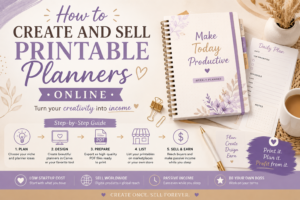
A friend once told me she had a notebook full of product ideas but could not tell which one was worth making. She had planners, templates, mini guides, and checklists on every page. What changed everything was one question: “What real problem would this make easier for someone?” That question is the heart of finding digital product ideas that solve real problems.
You do not have to chase every trend or guess what strangers will buy. Begin with people, their routines, and the moments that feel repetitive, confusing, or stressful. A useful digital product often starts as a small answer to a very ordinary question.
How to Find Digital Product Ideas That Solve Real Problems
Good ideas do not need to be completely new. They need to be clear and helpful. Your viewpoint, organization, examples, and audience can make a familiar format feel genuinely useful.
Look for evidence, not just inspiration
Instead of starting with a tool or a design, start with a problem. Pay attention to the questions people repeat, the tasks they avoid, and the results they want more quickly.
- Write down five questions people ask you or your audience.
- Notice recurring frustrations in comments, communities, and everyday conversations.
- List tasks that people repeat weekly or monthly.
- Separate a big problem into one small, useful step.
- Use the customer’s own words when you name the product.
OTHER RELEVANT BLOG POST TO CHECK OUT

A practical idea-research process
1. Choose a group you understand
Start with an audience whose routines or goals you can describe with care. You may be part of that group, or you may have helped them in another role.
2. Collect real problem language
Keep a note of exact questions. “I never know what to post” is more useful than the vague label “content struggles” because it points toward a possible calendar or prompt tool.
3. Find the smallest helpful outcome
A broad goal such as “get organized” can become a weekly meal-planning sheet, a digital declutter checklist, or a project tracker. Smaller is easier to finish and test.
4. Choose a familiar format
Match the product format to the task. A list may be best as a checklist, a repeated calculation as a spreadsheet, and a learning process as a short guide or workbook.
5. Ask whether someone would use it this week
The strongest early ideas usually have a near-term use. If your customer can picture opening it tomorrow, you are closer to a practical product.
Turn a question into a product
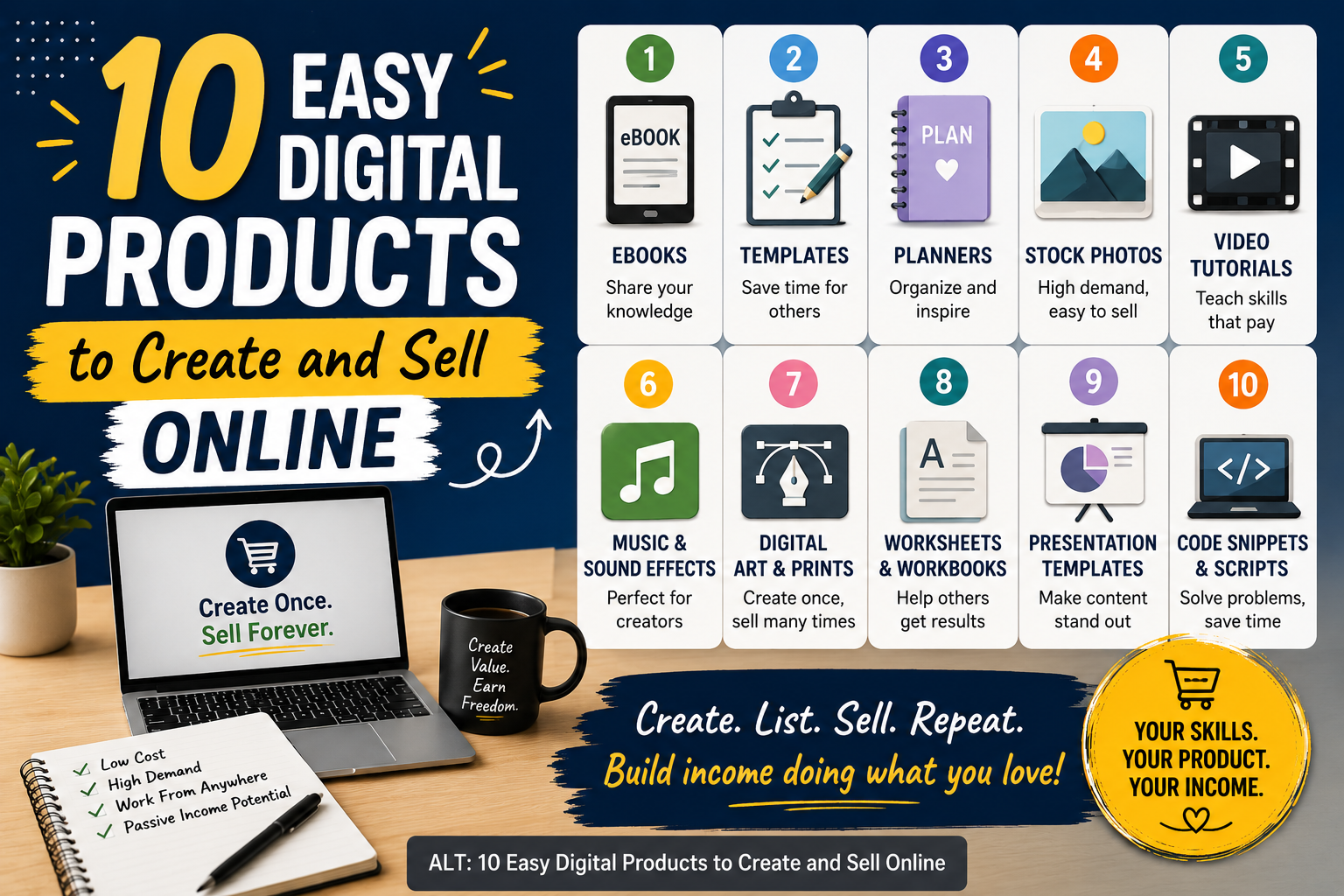
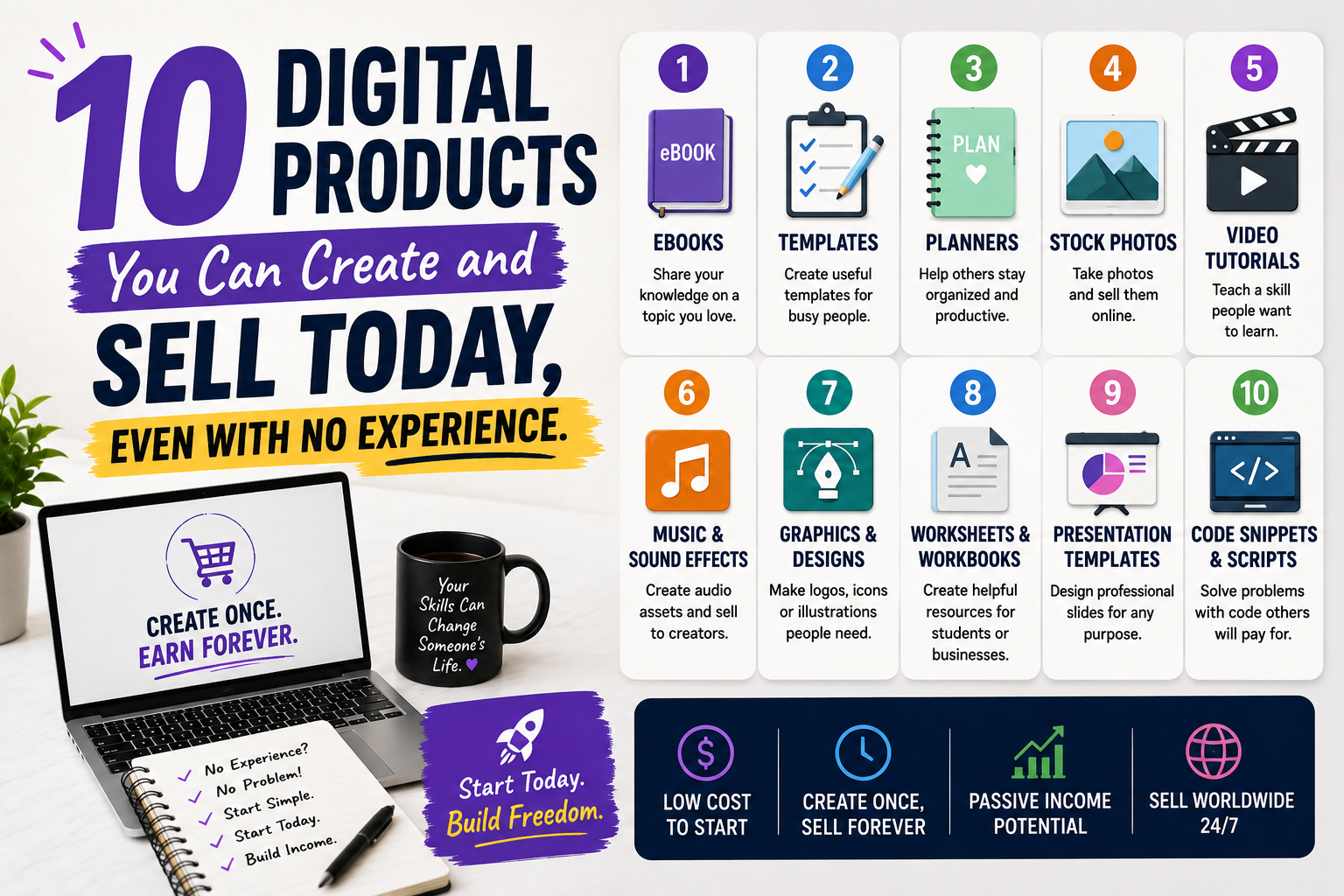
Suppose people often ask how to plan social posts without spending hours online. The problem is not simply “social media.” It is the weekly task of deciding what to say. A simple content-calendar template with prompts, a checklist, and example categories can meet that need. For more starting points, see 10 Digital Products You Can Create and Sell Today.
Do not confuse a polished idea with a proven need
A beautiful mockup can make an idea feel finished before anyone has used it. Keep the first version small, show a sample, and listen. That is how digital product ideas that solve real problems become offers people can understand.
A practical digital product ideas that solve real problems checklist
When you are working on digital product ideas that solve real problems, do not try to fix every part of your business at once. Choose one small action that improves the customer’s experience today. That might be clarifying a title, asking a better question, simplifying a page, or testing a file. Small changes are easier to complete, and they give you clearer information about what to do next.
A good idea can come from a small inconvenience. Notice where people use scraps of paper, repeat the same search, ask for a template, or postpone a task because it feels too big. Do not rush to create a large solution. Write down the smallest piece of help you could offer, then compare that idea with the actual language you have heard from the people you want to serve.
- What repeated task could this product simplify?
- Who has this problem often enough to need a tool?
- What would they be able to do after using the resource?
- Can you make a first version in one focused week?
- What question could you ask to test whether the idea is useful?
Use a short review session
Set aside twenty quiet minutes this week to review your work without judgment. Read the product description, open the sample, and imagine the moment a first-time customer sees it. Write down one thing that feels clear, one thing that could confuse someone, and one next action. This kind of review makes digital product ideas that solve real problems feel like a repeatable skill instead of a stressful guessing game.
Let real feedback guide the next version
You do not need to accept every suggestion, but you should notice patterns. If several people ask the same question, that is a sign to improve an instruction, add an example, or change the way you introduce the product. Keep a simple note of questions and ideas. Over time, those notes can guide product updates, new blog posts, and related resources that make your offer more useful.
Practice finding an idea in your everyday life
Think about a task you completed this week. Perhaps you planned meals, organized a family event, prepared for an appointment, made a budget, or helped someone use a tool. Write the steps you followed without trying to make them sound impressive. Then circle the place where a beginner might feel lost. That small point of confusion is often where a digital product can begin.
For example, a person who repeatedly helps friends prepare for a vendor event might create a vendor-day packing checklist. The product is not a vague promise to make someone successful. It is a clear tool that helps them remember practical steps. That is the kind of useful connection you are looking for when you explore digital product ideas that solve real problems.
- Choose one task you did this week.
- List the steps in the order you used them.
- Circle the step that usually confuses someone new.
- Name the person who has that problem.
- Choose a format that makes the step easier.
- Show a simple sample to one person in that audience.
What to notice as you move forward
Pay attention to whether your sample gives someone a clear next action. If it does, you are moving beyond an interesting idea and toward a useful resource. You can improve the design later; usefulness comes first.
Choose one idea to explore this week
You do not need to turn every problem you notice into a product. Choose the one that has a clear audience, a repeated need, and a first version you can realistically finish. If two ideas seem equally useful, begin with the one you can describe more simply. Clarity helps you create, test, and explain the offer without getting stuck in endless research.
A small product can be the beginning of a collection, not the final answer. A weekly planning page may lead to a matching meal tracker. A beginner checklist may lead to a fuller workbook. Give yourself permission to start with the smallest useful version and let real questions shape what comes next.
- Choose one idea instead of building several at once.
- Write its audience and outcome on one line.
- Create only the pages that support that outcome.
- Show a sample before adding extras.
- Record one improvement for the next version.
This is how digital product ideas that solve real problems become manageable work. Focus on usefulness, finish the first version, and let experience guide your next step.
Frequently asked questions
Where do I find digital product ideas?
Look at repeated questions, annoying routines, common goals, and the help people already ask for in your audience.
Do my ideas need to be original?
No. They need to be useful. A focused audience, clear instructions, and your own examples can make a familiar format valuable.
How do I know if an idea solves a real problem?
Ask people who match your audience to react to a sample or a simple description. Listen for whether they can picture using it.
What is a good first product format?
A checklist, tracker, template, short guide, or printable can be a manageable first product because it focuses on one useful action.
Can AI help me find product ideas?
AI can help brainstorm patterns and questions, but use real audience input to choose what is actually helpful.
Start with the problem, then make the tool
The best digital product ideas that solve real problems often look simple from the outside. Choose one person, one frustration, and one useful next step. That is more than enough to begin.