When I first started learning about digital products, I made the same mistake a lot of beginners make: I wanted to sell everything at once. E-books, templates, printables, courses, you name it. It felt exciting, but it also felt confusing. If you are in that same place right now, take a deep breath because this will help you avoid online business mistakes. You do not need to figure out everything today. You just need to choose one simple product and start a digital product business that solves one real problem. If you want extra support as you grow in this AI era, start with 21 HIGH INCOME SKILLS TO LEARN IN THIS AI ERA.
How to Choose the Perfect Digital Product to Sell as a Beginner
The best beginner digital product is usually not the fanciest one. It is the one you can create quickly, understand clearly in order to avoid beginner selling mistakes, and sell to people who already want it in order to boost your product visibility. That is the real secret. You do not need to be a tech expert or a famous creator. You just need a useful idea, a simple format, and a little consistency.
In this post, I will walk you through how to choose a digital product that fits your skills, your audience, and your time. I will also show you how AI can help you use social proof well so you create faster without making things complicated.
What Makes a Great Digital Product for Beginners?
A good beginner digital product usually checks these boxes:
- Simple to make — you can build it without weeks of stress.
- Easy to explain — people instantly understand what it does.
- Helpful — it solves a clear problem or saves time.
- Low cost to create — you do not need inventory or shipping.
- Easy to deliver — customers can download it right away.
If you are wondering whether digital products are still worth it, the answer is yes. People love buying tools that help them save time, get organized, learn faster, or make money. That is especially true in the AI era, where speed and simplicity matter more than ever.
The Easiest Digital Products to Sell When You Are Starting Out
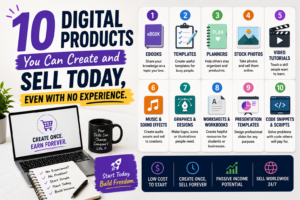
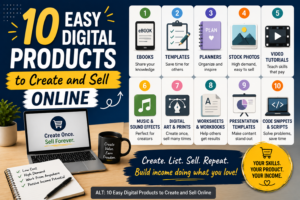
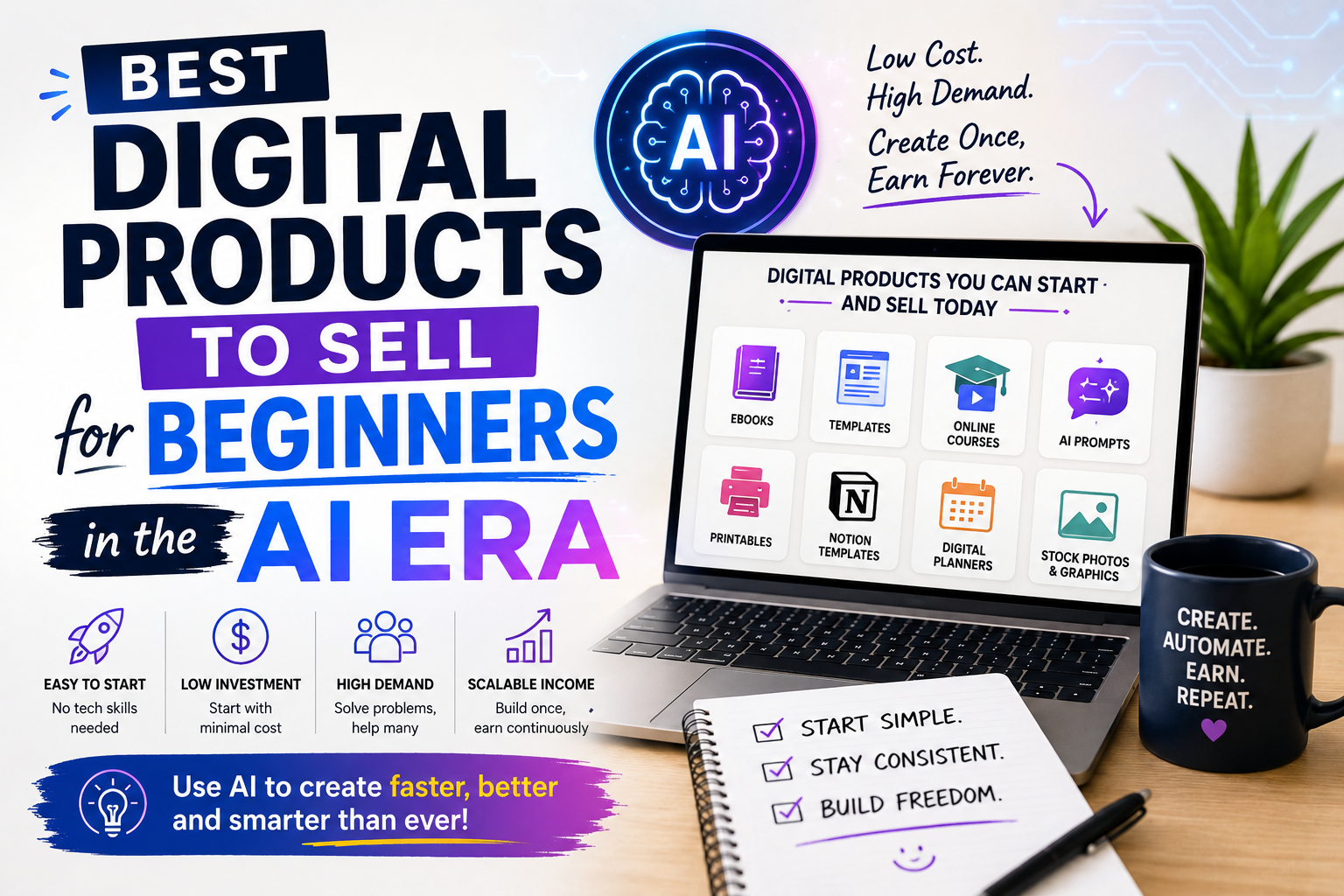
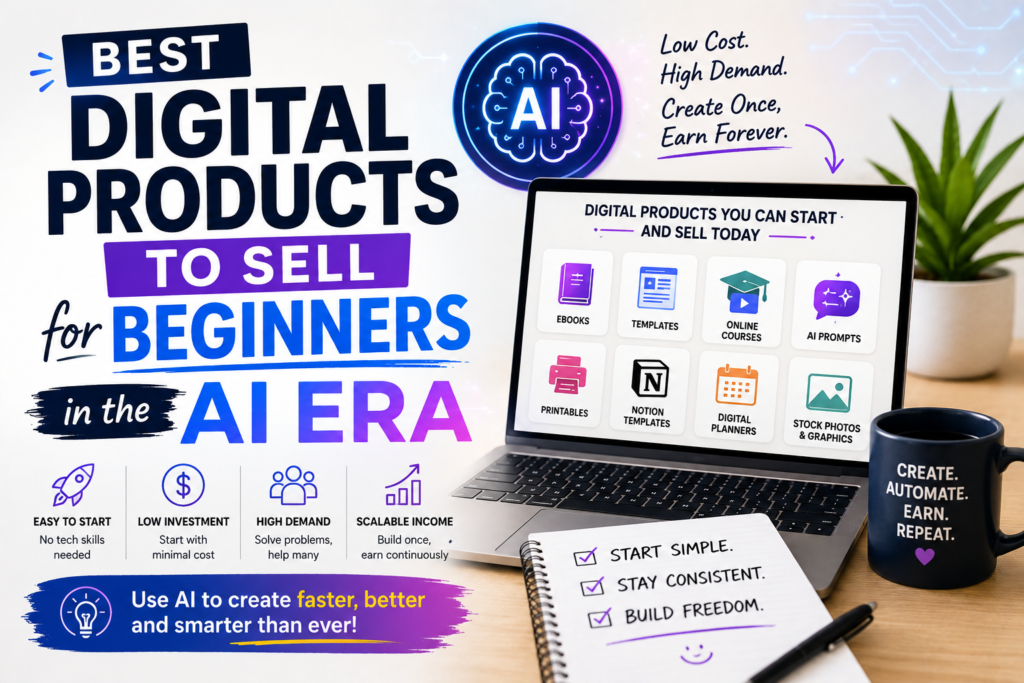
If you are a beginner, these are some of the best options to consider:
- Checklists — great for step-by-step tasks.
- Templates — perfect for resumes, planners, emails, social media, and business systems.
- Printables — simple worksheets, trackers, and planners.
- Mini guides — short how-to resources that answer one specific question.
- Prompt packs — very popular if you want to help people use AI better.
- Swipe files — collections of examples, captions, headlines, or scripts.
If I were starting from zero today, I would probably choose one of these three: a template, a checklist, or a prompt pack. Why? Because they are fast to make, easy to improve, and easy for customers to understand.
A Simple Way to Pick the Right Product
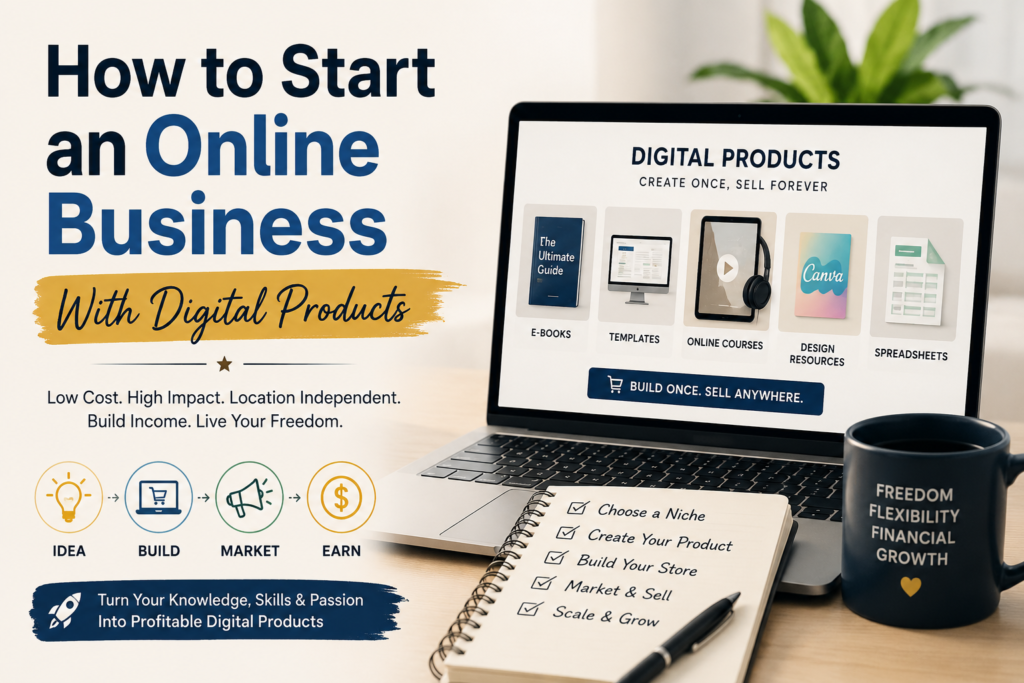
Here is a beginner-friendly process you can follow:
- Look at your own skills. What do you already know how to do well?
- Look at your audience. What do people ask you for help with?
- Look for a problem. What feels frustrating, confusing, or time-consuming for them?
- Choose one product format. Match the problem to a simple product type.
- Check if people want it. Search on Google, Etsy, YouTube, TikTok, or Pinterest.
- Start small. Make a first version and improve it later.
OTHER RELEVANT BLOG POST
This is the part many beginners skip: validation. Before you spend hours creating something, make sure people actually want it. You can check demand by typing your idea into Google, looking at search suggestions, browsing Etsy listings, or checking Google Trends.
How AI Can Help You Create Faster
AI is a game changer for beginners. It can help you brainstorm ideas, outline your product, write product descriptions, and even create simple content faster. Tools like OpenAI can help you generate ideas, while Canva makes it easier to design beautiful templates, planners, and lead magnets.
Here are a few ways AI can help:
- Brainstorm niche ideas and product names
- Write outlines for mini guides or ebooks
- Create prompt ideas for AI product packs
- Improve your sales copy and product descriptions
- Speed up research and organization
AI does not replace your voice. It supports your ideas. The best products still come from real people who understand real problems. So use AI as your assistant, not your replacement.
My Best Tips for Choosing a Product That Actually Sells
- Choose one audience. Do not try to sell to everyone.
- Pick one problem. The clearer the problem, the easier it is to sell.
- Make it practical. People pay for results, clarity, and convenience.
- Keep it simple. A useful small product is better than a complicated big one.
- Test before you scale. Sell one good product, then build more later.
A lot of people think they need a huge course to make money online, but that is not always true. Sometimes a $9 checklist, a $17 template bundle, or a $27 prompt pack is the perfect place to start. The goal is to begin with something manageable and learn as you go.
A Quick Example
Let’s say you are good at organizing faith-based routines. A beginner-friendly digital product could be:
- A daily prayer planner
- A scripture journaling template
- A habit tracker for quiet time
- A mini devotional workbook
Now let’s say you are interested in AI and business. Your product could be:
- A prompt pack for content creators
- A checklist for using AI to save time
- A beginner guide to AI tools
- A social media caption template pack
See how much easier it gets when you focus on one specific person and one specific outcome? That is how beginners avoid overwhelm.
Common Mistakes Beginners Should Avoid
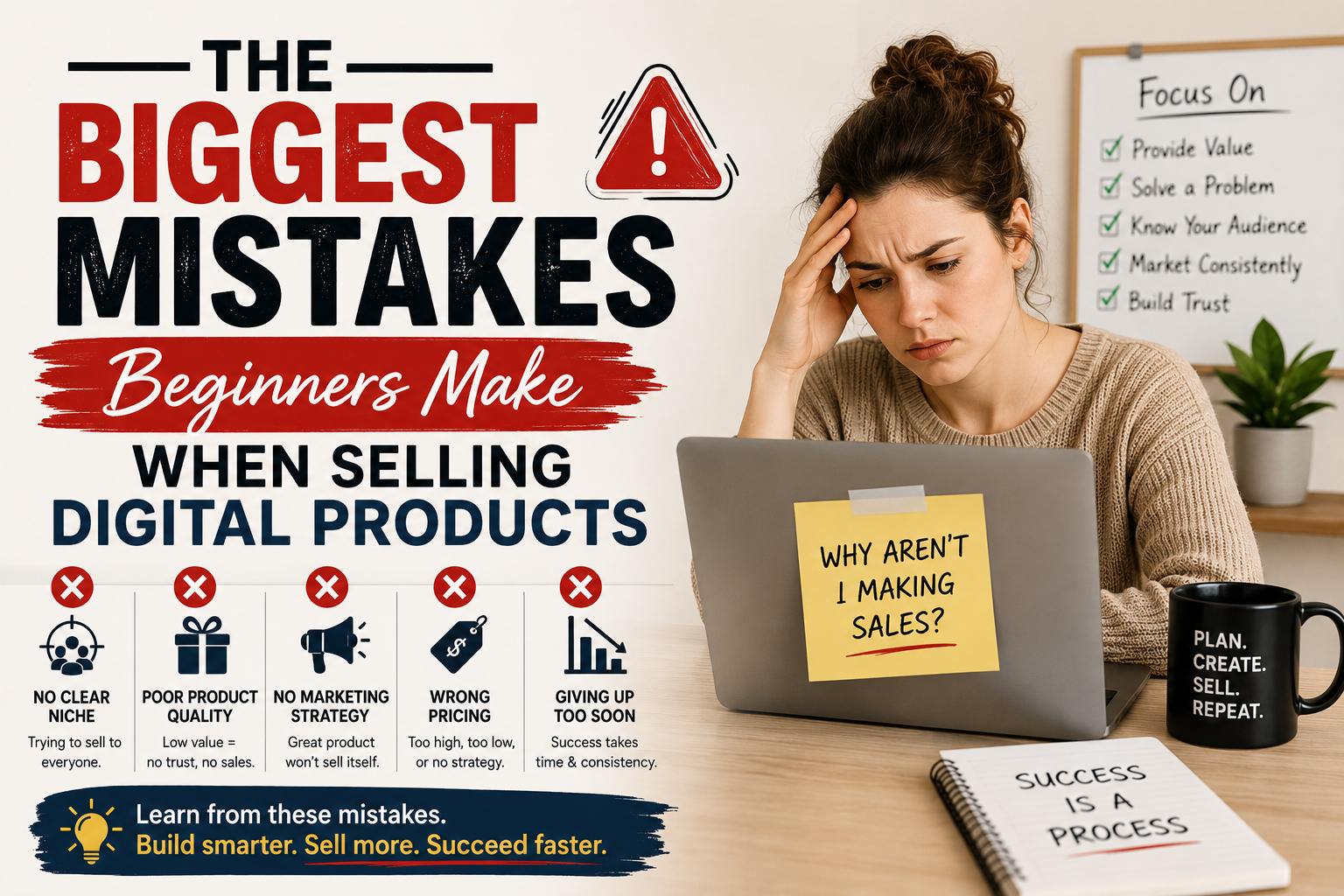
- Trying to create too many products at once
- Picking a product nobody is asking for
- Making the product too long or too complicated
- Ignoring design and readability
- Not writing a clear product description
- Waiting too long to launch
You do not need perfection. You need progress. Launch your first version, learn from it, and make it better over time.
FAQ
What is the easiest digital product for a beginner to sell?
Templates, checklists, and prompt packs are usually the easiest because they are simple to make and easy for buyers to understand.
Do I need a website to sell digital products?
Not always. You can start with a simple sales page or marketplace, then build your own website later as you grow.
Can AI really help me create digital products?
Yes. AI can help you brainstorm, outline, write, and organize faster. It is especially helpful when you are learning and want to move quickly.
How do I know if my product idea is good?
If it solves a real problem, is easy to explain, and people are already searching for something like it, you likely have a strong idea.
Final Thoughts
Choosing the perfect digital product as a beginner does not have to feel hard. Start with what you know, focus on one real problem, and choose a product format that is simple to create. Then use AI and smart tools to help you move faster.
If I can leave you with one final piece of advice, it is this: do not wait for the perfect idea. Pick a good idea, make it small, and take action. That is how real momentum starts.
Your next step: choose one product idea today, validate it, and create your first simple version this week.